Sliding doors are a favorite in San Jose for light, backyard access, and indoor-outdoor living, but they're also one of the more commonly targeted entry points in break-ins. Strong sliding door security starts with understanding how these doors actually fail, then layering practical upgrades that fit your door, your family, and your budget.
Most homeowners assume the factory latch is "good enough." In reality, failure usually comes down to a few predictable issues: worn latch parts that no longer fully engage the strike plate, misalignment from settling, track wear, or roller problems, weak screws or soft frames that flex under force, vertical play in the panel that allows a lift-and-slide attempt, and accessible thumb-turns, especially on older keyed styles. A good starting point is checking alignment -- if the door rattles, lifts, or needs a shoulder push to lock, the hardware is already at a disadvantage.
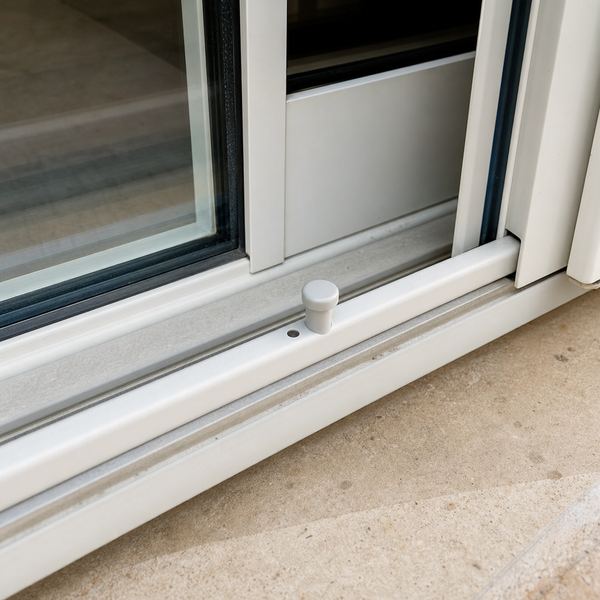
Before upgrading, it helps to know the main lock types in plain language. A mortise-style hook bolt is common on higher-end doors and can be very secure when adjusted correctly. A single-point latch is the standard factory latch on many sliders -- convenient, but often the weakest link. A keyed lock adds access control, though strength varies widely by brand and install quality. A double bolt or secondary lock adds an extra locking point, often into the frame or jamb. A pin lock is a removable pin that prevents sliding -- useful, but not always the most convenient option.
A keyed lock helps with access control, while a well-installed double bolt or comparable secondary lock often improves resistance to prying and forced movement. Many homes benefit from both: a primary lock used daily, plus a secondary lock for nights, vacations, or ground-floor doors.
Security bar installation. A properly sized bar in the track is still one of the simplest, most effective forms of sliding door security. Place it on the inside track so the door can't slide open, cut it to a snug fit so it doesn't rattle loose, and if you need ventilation, size it to allow a small opening without full access.
Anti-lift protection. An anti-lift device limits upward movement so the panel can't be lifted and popped out of the track, which matters especially for older sliders with loose tolerances. Some solutions are simple screws or brackets installed above the moving panel; others are dedicated hardware kits.
Track reinforcement. This focuses on keeping the frame and track from deforming under pressure -- reinforced strike plates with longer screws into framing, upgraded track and roller service to restore alignment, and secondary locks that anchor into sturdier parts of the jamb.
Upgraded locks. Not all sliding door locks are equal. If your door uses a basic latch, adding a secondary lock designed for sliders (foot-operated secondary bolts, jamb-mounted sliding bolts, or security latches with hardened components) is often easier to use consistently than a pin lock.
If you want a straightforward approach, work through this layered checklist: fix alignment first (rollers and track) so the lock fully engages, add a security bar for immediate resistance, install an anti-lift solution to eliminate lift play, upgrade the primary latch or add a secondary lock, reinforce the strike and fasteners into framing, consider security film on the glass where appropriate, and verify you can still exit quickly in an emergency. This combination is usually more effective than buying the fanciest lock while ignoring the track.
A smart lock can be useful for monitoring and convenience, but it isn't automatically more secure than quality mechanical hardware. Smart options work best when the door is already aligned and closes tightly, you pair the smart mechanism with a robust physical or secondary lock, and you use strong PIN management and alerts. If your slider has play in the panel or a weak latch, a smart add-on won't fix the underlying mechanical weakness.
Families often need to prevent wandering through a patio door while still allowing quick adult exit. Good approaches include high-mounted secondary locks out of a child's reach, door alarms for "open" events, and track bars sized for a limited, supervised vent opening. Avoid any solution that makes emergency egress difficult for adults -- the goal is controlled access, not trapping occupants.
Pricing depends on the lock type and whether the door needs service beyond the lock itself. Costs tend to rise when the lock is discontinued or proprietary, the door is misaligned and needs roller or track work, the frame or strike area is damaged, or you're adding reinforcement or a secondary lock. Asking for an itemized quote helps you compare "lock only" against "lock plus alignment plus reinforcement," which is often the real security upgrade.
Home insurance requirements for door locks vary by carrier and policy, but insurers commonly expect exterior doors to have functioning locks and reasonable security measures in place. Before assuming an upgrade will change your premium or coverage, it's worth confirming what your specific policy requires, especially if you're adding smart features or changing keyed access.
If your lock only "works" when you lift the handle hard, or the door drags and won't seat correctly, it's a sign to call a locksmith or a qualified door hardware specialist. The best lock on the market won't help if the latch doesn't align with the strike, the door can be lifted significantly, or the frame flexes and the strike is pulling out. A professional can also recommend upgrades that fit your door's existing prep and brand.
San Jose Locksmith is licensed under California Locksmith License LCO 6739 (BSIS) and open Sunday through Thursday 9 AM to 9 PM and Friday 9 AM to 5 PM (closed Saturday) for sliding door and patio door lock service.
Why do sliding door locks fail?
It usually comes down to a few predictable issues: worn latch parts that no longer fully engage the strike plate, misalignment from settling or track wear, weak screws or soft frames that flex under force, vertical play in the panel that allows a lift-and-slide attempt, and accessible thumb-turns on older keyed styles. Checking alignment first is a good starting point -- if the door rattles or needs a shoulder push to lock, the hardware is already at a disadvantage.
What's the difference between a security bar and an anti-lift device?
A security bar sits in the track and prevents the door from sliding open, which is a simple, effective first layer. An anti-lift device limits upward movement so the panel can't be lifted and popped out of its track -- a separate vulnerability, especially on older sliders with loose tolerances. Many homes benefit from addressing both.
Is a smart lock a good option for a patio door?
It can help with monitoring and convenience, but it isn't automatically more secure than quality mechanical hardware. Smart locks work best when the door is already properly aligned and closes tightly, and when paired with a robust physical or secondary lock. If the slider has play in the panel or a weak latch, a smart add-on won't fix the underlying mechanical weakness.
How much does it cost to upgrade sliding door security?
It depends on the lock type and whether the door needs service beyond the lock itself. Costs tend to rise when the lock is discontinued or proprietary, the door is misaligned and needs roller or track work, the frame or strike area is damaged, or you're adding reinforcement or a secondary lock. Asking for an itemized quote helps you compare a simple lock swap against a full alignment-plus-reinforcement job.
Last updated: August 2026