San Jose offices are changing fast: hybrid schedules, frequent contractor visits, shared suites, and higher expectations for accountability. Both traditional master key systems and electronic access control can secure doors, but they solve different problems. If you're planning an office security refresh or moving into a new space, the best choice depends on your risk profile, compliance needs, and day-to-day operations -- and many offices end up using a hybrid of both.
Traditional master key systems (physical keys). A conventional lock-and-key setup where a master key hierarchy lets specific keys open multiple doors. A master key hierarchy is simply the organized structure of access levels -- for example, an individual office key, a department master, and a building master.
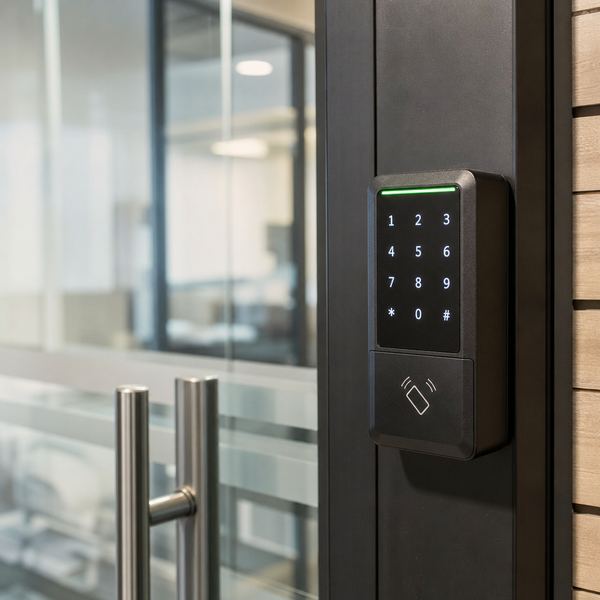
Access control (electronic). Electronic access control systems commonly use badges, fobs, PINs, or mobile credentials to unlock doors, with management software controlling who can enter and when. Many modern access control solutions are cloud-managed, which brings real operational advantages.
Traditional master key vulnerabilities. Physical keys are simple, but that simplicity creates predictable weak points: keys can be copied, sometimes without authorization depending on keyway control; lost keys are hard to "undo" without changing hardware; there's no visibility into who unlocked a door and when; and master keys are high-value targets, since one loss can expose an entire floor or building.
Can access control reduce theft? Often, yes, especially for internal theft or after-hours incidents. It helps by limiting entry to approved users and time windows, and by producing access logs that can deter misuse and speed up investigations. Access control tends to be strongest when you need time-based rules (cleaners in the evening, for example), quick removal of access, or documentation for incidents or compliance.
With physical keys, office changes trigger a chain reaction: collecting keys, tracking spares, and potentially rekeying. With access control, changes typically happen in software, often in minutes. Consider a common scenario: an employee leaves unexpectedly on a Friday. With keys, that may mean scheduling a locksmith, replacing cores, issuing new keys, and updating the master system. With access control, deactivating the credential can be immediate.
Strong access permissions management with electronic systems typically includes role-based access (HR, IT, Finance, for example), temporary access for vendors, automatic expiration for interns or contractors, and unique credentials per person rather than shared keys.
Many organizations need documentation of who accessed restricted areas -- server rooms, records rooms, labs, or controlled storage. Access control systems can support internal policies and industry requirements by providing reporting, retention, and user-level accountability. Master keys, by contrast, typically can't prove who opened a door, only that the door was opened.
What drives access control cost. Pricing varies widely, but it usually depends on door count and door type (wood, aluminum storefront, metal frame), lock hardware (electric strike, maglock, smart lock), credential type (cards, mobile, PIN), network and power needs, whether doors are already wired, cloud subscription versus on-premise software, and integrations with cameras, alarms, or visitor management. It's worth evaluating total cost of ownership rather than sticker price alone -- factoring in time spent managing keys, rekey events, security incidents, and business disruption.
Master key systems can be deceptively "cheap." A well-executed master key system can be cost-effective initially, but long-term costs show up when there's turnover and missing keys, when the hierarchy becomes messy as you expand, or when you need to rekey multiple doors after a single key incident.
If you're a startup or fast-growing professional services firm, access control tends to scale better. Cloud tools help you add doors and users without redesigning the entire key plan. For many San Jose businesses, cloud-based access control benefits include remote administration (adding or removing users from anywhere), faster onboarding and offboarding, centralized reporting across multiple locations, and fewer server-room headaches.
If you're deciding between the two, start with these questions: How often do people change -- turnover, contractors, vendors? Do you need audit logs for incidents or compliance? What's your risk tolerance for key loss? Do you need different schedules by role? Will you expand within the next 12 to 24 months? What's your building setup -- wired or hard-to-wire doors?
There isn't one universal "best" system for every small business -- the right fit matches your door count, workflow, and administrative capacity. In practice, small offices with 2 to 8 doors often do well with mobile credentials or fobs, simple role-based permissions, and cloud management for ease of use.
Many office security upgrades combine both systems: access control on exterior doors, suites, and sensitive rooms, mechanical keys on low-risk interior spaces, and a limited master key hierarchy restricted to facilities management. This approach can reduce cost while still addressing the biggest exposure points.
If you're planning an access control installation, a few steps can reduce surprises: map doors by risk level (public, staff-only, restricted), decide which doors require audit trail logging, create roles and rules before hardware is installed, plan for emergencies (fail-safe versus fail-secure behavior, lockdown procedures), and document offboarding so that deactivating a credential is a mandatory step, not an afterthought.
If your office is stable, low-turnover, and you don't need audit logs, a well-planned master key system can work, especially with careful design and controlled key issuance. But if you need flexibility, accountability, and a faster response to change, access control typically provides the stronger long-term security and management story for modern workplaces -- largely because it replaces rekey events with a simple credential deactivation.
San Jose Locksmith installs both access control systems and traditional master key setups as part of our regular commercial locksmith work, and we're licensed under California Locksmith License LCO 6739 (BSIS). We're open Sunday through Thursday 9 AM to 9 PM and Friday 9 AM to 5 PM (closed Saturday) to help you evaluate the right fit for your San Jose office.
What's the difference between access control and a master key system?
A traditional master key system uses a hierarchy of physical keys where certain keys open multiple doors. Access control uses badges, fobs, PINs, or mobile credentials with management software controlling who can enter and when, typically without any physical keys at all.
Can access control really reduce theft or unauthorized entry?
It often helps, especially for internal theft or after-hours incidents, by limiting entry to approved users and time windows and by producing access logs that can deter misuse and speed up investigations. It isn't a guarantee, but it adds visibility that physical keys don't provide.
What happens when an employee leaves -- is rekeying or access control easier?
With a master key system, an employee leaving means collecting keys, tracking spares, and potentially rekeying affected doors, which usually requires scheduling a locksmith. With access control, deactivating a credential in the management software can be immediate, without touching any hardware.
Do I have to choose one system or can I combine them?
Many San Jose offices use a hybrid approach: access control on exterior doors, suites, and sensitive rooms, with mechanical keys reserved for low-risk interior spaces and a limited master key hierarchy restricted to facilities staff. This can reduce cost while still addressing the biggest exposure points.
Last updated: August 2026