If your key suddenly won't turn or your car won't start and you suspect an ignition cylinder issue, the fix usually comes down to condition: repair or rekeying works when the cylinder is intact and the problem is mechanical or key-related, while replacement is the better route when the cylinder is damaged, won't turn at all, or keeps sticking despite service. A qualified automotive locksmith can often diagnose the difference on-site.
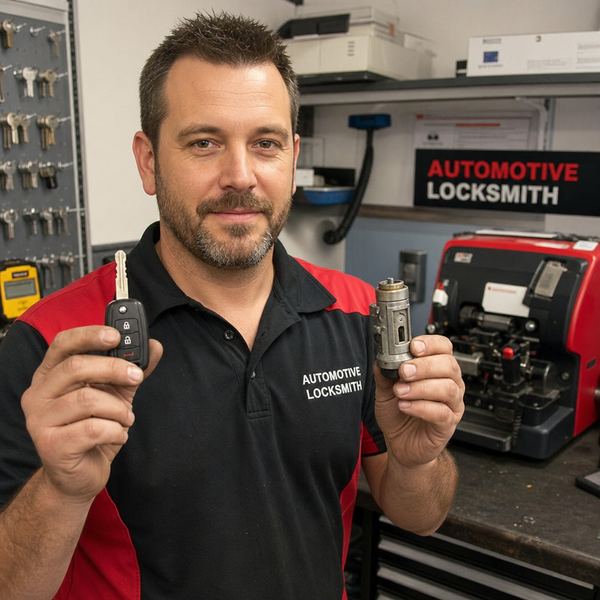
In San Jose's stop-and-go traffic and the quick errands that come with daily driving, ignition parts get used constantly. This guide breaks down what fails, what it costs in general terms, and how to choose between a repair, a rekey, or a full replacement.
These two parts are often confused, but they fail in different ways:
Knowing this difference helps you avoid paying for the wrong fix -- a shop might describe it as switch repair, while a locksmith typically focuses on the lock-cylinder level.
If the key turns smoothly but nothing happens electrically, that leans more toward a switch issue rather than the cylinder itself.
Repair or rekeying tends to be the right call when:
A locksmith may clean, service, and re-pin the cylinder depending on the design. Locksmiths typically specialize in this kind of key and cylinder work, while mechanics more often replace the whole assembly.
If you're stuck in a parking lot:
If anything feels like it's forcing, stop. Broken keys and damaged internal wafers can turn a simple repair into a full replacement.
Replacement becomes the more practical move when:
When a car is immobilized, speed and correct diagnosis matter more than squeezing out a marginal repair.
Many modern vehicles use chipped, transponder-based keys. If your car has an immobilizer system, reprogramming may be required after a cylinder change, especially if new keys are introduced. Before work begins, it's worth asking whether your existing transponder key will still work, whether new keys need to be cut and programmed, and whether programming can happen on-site or requires dealer-level equipment. This is a common reason a "simple cylinder swap" turns into a more involved job.
There isn't one universal number, but a few factors typically drive the price: repair or rekeying is usually less expensive when the cylinder is serviceable and no major parts are needed; replacement costs more when the cylinder is sold only with additional components, when labor time is higher, or when programming is required; and after-hours calls or mobile service can affect pricing as well. The most reliable way to avoid surprises is to ask for a breakdown of parts, labor, the service call, and any programming fees before work begins.
Some vehicles require turning the key to a specific position, accessing a release pin, removing steering column trim, and working around airbags or shear bolts to remove a cylinder. If your key won't turn to begin with, those "easy steps" often don't apply cleanly. Without steering-column experience, a DIY attempt can escalate a stuck-key situation into a non-drivable vehicle -- this is one repair where calling a professional the first time is usually the safer and cheaper path.
Consider it an emergency and call for help right away if you're stranded and the key won't turn, the key is stuck and you can't shut off or secure the car, the steering wheel is locked and you can't maneuver safely, or you suspect tampering or attempted theft. In an emergency, prioritize getting safely mobile first -- you can decide later whether to rekey or replace for a long-term fix.
San Jose Locksmith is licensed under California Locksmith License LCO 6739 (BSIS) and open Sunday through Thursday 9 AM to 9 PM and Friday 9 AM to 5 PM (closed Saturday) for automotive ignition service.
What's the difference between the ignition switch and the ignition lock cylinder?
The ignition lock cylinder is the mechanical tumbler where your key goes -- problems here feel like a key that sticks, won't turn, or gets trapped. The ignition switch is the electrical component behind the cylinder that sends power to the starter and accessories -- failures here look more like intermittent power, no crank, or stalling. A locksmith typically focuses on the cylinder; an electrical issue may need a mechanic.
Can a locksmith replace a car's ignition cylinder?
In many vehicles, yes. A qualified automotive locksmith can often replace the cylinder, rekey it to match your existing key, or cut new keys depending on the system. Some models require a mechanic or dealer due to immobilizer integration or steering column disassembly requirements -- it depends on the vehicle.
Should I repair or replace my ignition cylinder?
Repair or rekeying tends to make sense when the key is simply worn, the tumblers are dirty or slightly sticking, and the housing is intact. Replacement is the better choice when the cylinder is physically damaged, the key won't insert or rotate at all after basic troubleshooting, or it keeps sticking despite prior service.
Is it safe to try removing the ignition lock cylinder myself?
It isn't recommended without experience. Depending on the vehicle, removing a cylinder can involve a release pin, steering column trim, airbags, or shear bolts. If your key won't turn, DIY attempts can turn a simple stuck-key situation into a non-drivable vehicle -- it's safer to have a locksmith or mechanic diagnose it first.
Last updated: August 2026